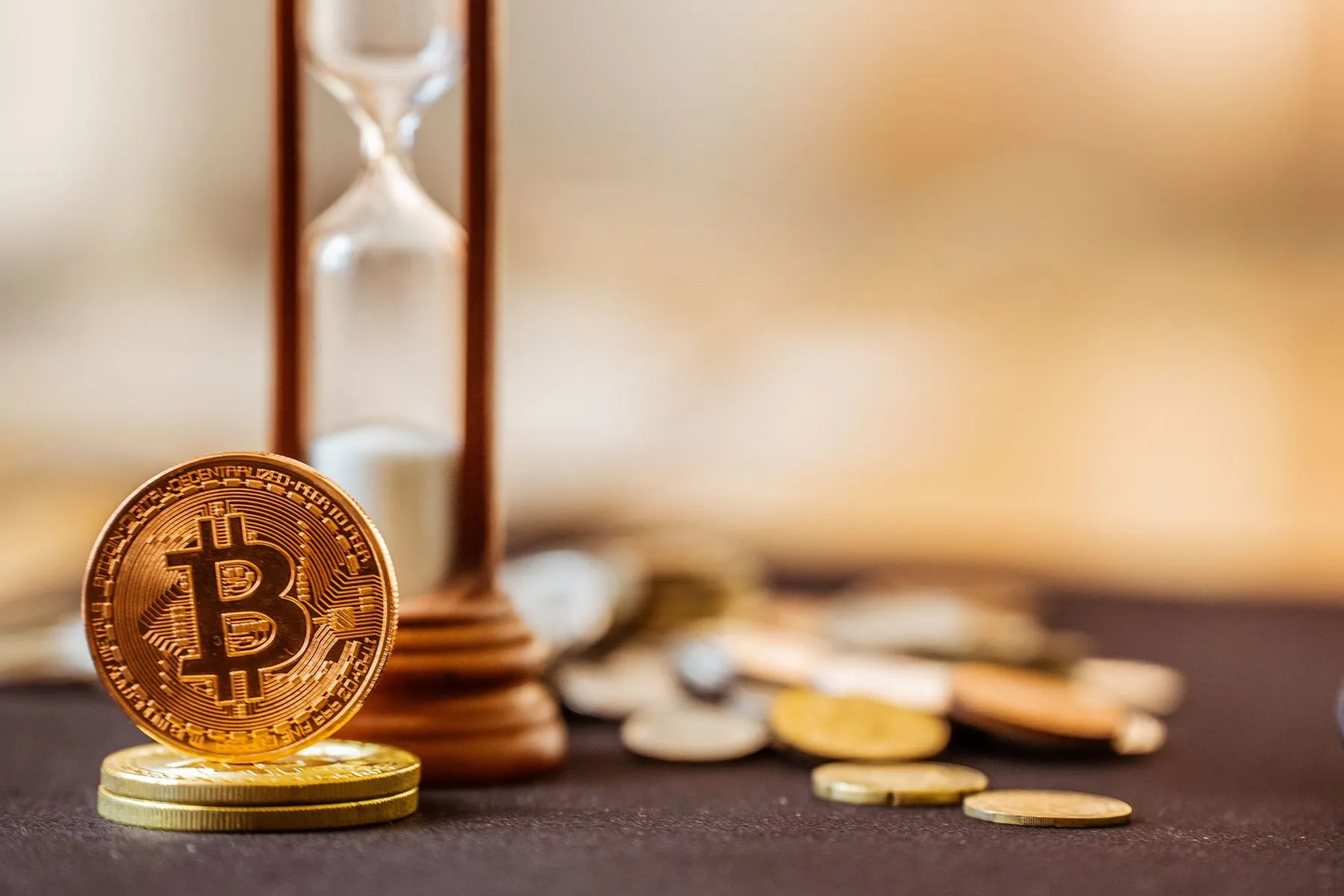
A commodities town
Decatur is the corn and soybean processing capital of the Midwest. Archer Daniels Midland was founded and headquartered here for most of its history, Tate & Lyle runs major operations, and Caterpillar maintains a large plant. Agriculture, food processing and heavy manufacturing define the local economy, and the language of futures, basis and hedging has been ordinary here for generations.
That matters for crypto in a specific way. In most Illinois cities of this size, the biggest barrier to understanding digital assets is that people have no frame of reference for a market that moves 20% in a month. In Decatur, plenty of people have watched a grain contract do something comparable and understand intuitively what position sizing means.
The city carries a moderate crypto kiosk presence, concentrated along the main commercial corridors — Pershing Road, North Water Street, Eldorado Street and the Route 36 retail belt — with Coinme coverage in local grocery retail. There is no institutional presence and no walk-in exchange office.
Where to buy in Decatur
$400 into crypto, four routes
| Route | Roughly what you keep | Time |
|---|---|---|
| Licensed exchange, ACH, limit order | $396–$399 | 1–3 business days |
| Licensed exchange, debit card | $384–$394 | Seconds |
| Coinme via Coinstar | $340–$376 | ~15 minutes |
| Crypto kiosk | $328–$360 | Immediate |
Illustrative, based on published 2026 rates. Kiosk pricing varies machine to machine within one network.
Before funding an exchange account, check the venue on NMLS Consumer Access. Illinois requires IDFPR licensing of digital asset firms by 1 July 2027 under the Digital Assets and Consumer Protection Act, with penalties reaching $100,000 per day for unlicensed activity. A real licence shows a number, a status and a state list.
Kiosks in Decatur, as everywhere in Illinois, operate under the Digital Asset Kiosk Act: charges capped at the greater of $5 or 18%, daily limits of $2,500 for new customers and $10,500 for established ones, mandatory disclosure before you confirm, blockchain analytics screening and live customer support during operating hours.
Volatility, honestly
In a town that understands hedging, it is worth being direct about what digital assets are and are not.
They are not a hedge against anything reliable. Bitcoin has behaved at various times like a risk asset, like a technology stock, and like nothing in particular. It has not consistently behaved like an inflation hedge or like gold. Anyone selling it as portfolio insurance is describing a hope, not a historical property.
Drawdowns are large and long. Peak-to-trough declines exceeding 70% have occurred multiple times, and recovery periods have run to years. That is not a defect in the asset — it is the asset. Size accordingly.
There is no cash-flow anchor. A grain contract settles against a physical commodity with known supply and demand. A digital asset has no earnings, no yield in the traditional sense, and no fundamental value that can be modelled the way a crush spread can. Price is entirely a function of what someone else will pay.
None of that is an argument against holding some. It is an argument against holding an amount whose loss would change decisions you have already made. That principle is not different from any other speculative position, and most people in this city already know it.
What changes in 2027
From 1 January 2027 the Digital Asset Tax Act imposes 0.2% on the value of any digital asset a broker exchanges, transfers or stores for an Illinois customer. Signed as part of Public Act 104-0468 on 16 June 2026, it makes Illinois the first US state to tax digital asset activity directly.
Three features worth understanding:
- It taxes activity, not profit. A losing trade is charged identically to a winning one.
- Transfers count. Moving assets between two accounts you personally own is explicitly included.
- It is charged to you. Brokers collect it and show it as a separate line item on your bill.
It does not replace federal tax. The IRS treats digital assets as property, so disposals create capital gains or losses, and Illinois taxes those gains through your ordinary state return. Two industry lawsuits challenging the Act are pending in the Sangamon County Circuit Court. Our tax guide covers the statute and the litigation.
Fraud and refunds
Illinois logged 510 crypto kiosk complaints in 2025 with adjusted losses of $20,077,277, sixth highest of any state. Nationally, more than half of the 13,460 complaints came from people fifty and over.
The Digital Asset Kiosk Act gives Illinois victims a statutory refund right. A new customer of that operator can recover up to three fraudulent transactions from their first week or first three uses. Notify the operator within 30 days; supply a police report within 60 days. File with the Decatur Police Department or the Macon County Sheriff, keep the case number, and report separately to the FBI's IC3.
The pattern to watch for: a caller impersonating a bank, utility, government agency or family member creates urgency, stays on the line, and directs you to a specific machine. No legitimate institution ever does this. Our refund guide covers the claim process.
For ADM, Caterpillar and Tate & Lyle employees
A large share of Decatur works for one of a handful of substantial employers, and two questions come up from that group often enough to answer here.
Personal trading policies. Large corporates — particularly those with commodity trading operations — commonly maintain codes of conduct governing personal investments. Some now extend explicitly to digital assets; many were written before 2022 and say nothing, which is not the same as permitting them. Check before opening an account rather than after. Look for pre-clearance requirements, approved-venue lists, blackout windows around reporting periods, and duplicate statement obligations that crypto exchanges frequently cannot satisfy in the expected format.
Retirement accounts. Employer-sponsored plans generally do not hold digital assets directly, and the Illinois Digital Asset Tax Act taxes broker activity rather than plan holdings. If you hold crypto personally in a taxable account, that is where the 0.2% lands from 1 January 2027 — not in your 401(k).
Neither of these is a reason not to participate. They are reasons to ask a compliance officer a short question first, which costs nothing and removes a genuinely awkward conversation later.
Decatur crypto questions
Where can I buy bitcoin in Decatur, Illinois?
Online through a licensed exchange funded by bank transfer or debit card — cheapest by a wide margin. Through Coinme at green Coinstar machines in local grocery retail, if you deal in cash. Or at a crypto kiosk along Pershing Road, North Water Street, Eldorado Street or the Route 36 retail belt — fastest and most expensive, capped by Illinois law at the greater of $5 or 18%.
Is bitcoin a good hedge like a commodity position?
Not reliably. Bitcoin has behaved at various times like a risk asset, like a technology stock and like nothing in particular — it has not consistently behaved like an inflation hedge or like gold. It also has no cash-flow anchor and no physical settlement, so it cannot be modelled the way a grain contract can. Peak-to-trough declines above 70% have occurred multiple times with multi-year recoveries. Size any position on that basis.
What do crypto ATMs charge in Decatur?
Illinois caps kiosk charges at the greater of $5 or 18% of the transaction value under the Digital Asset Kiosk Act. Machines in Decatur typically price in the low-to-high teens. Watch the exchange rate separately from the fee — operators must display both before you confirm, and a modest headline percentage attached to a poor rate costs you the same as a high fee at a fair rate.
Does the new Illinois crypto tax apply in Decatur?
Yes, from 1 January 2027. The Digital Asset Tax Act applies statewide to any broker exchanging, transferring or storing digital assets for a customer whose place of primary use is Illinois. It charges 0.2% of asset value per event, regardless of profit, and includes transfers between your own accounts. Two lawsuits challenging it are pending in the Sangamon County Circuit Court.
Related Illinois guides