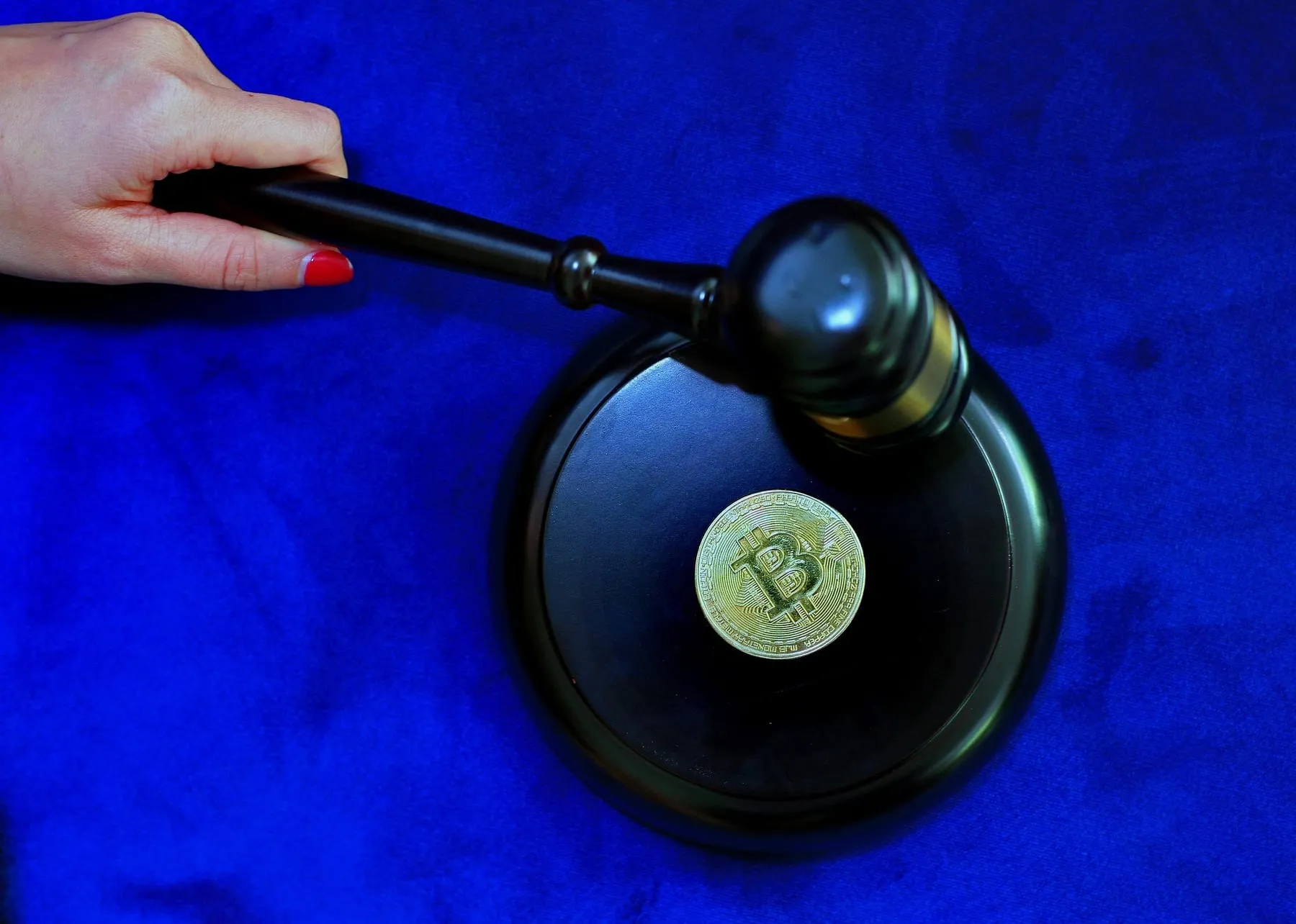
Two regimes, one regulator
Illinois regulates digital asset businesses through two overlapping frameworks, both administered by the Illinois Department of Financial and Professional Regulation — specifically its Division of Financial Institutions.
A serious platform will typically be caught by more than one of these, plus federal registration with FinCEN. That layering is why licence verification is genuinely informative rather than a box-ticking exercise.
DACPA and the 1 July 2027 deadline
The Digital Assets and Consumer Protection Act is the significant change, because it brings crypto businesses under direct state supervision rather than regulating them incidentally through money transmission law.
Who must register
Digital asset businesses serving Illinois customers — exchanges, custodians, and firms conducting digital asset business activity on behalf of others. The deadline is 1 July 2027.
What IDFPR gains
Full supervisory authority, including examinations, assessments and enforcement powers. Penalties for unlicensed activity reach $100,000 per day.
What licensed firms must do
- Segregate customer assets from the firm's own.
- Keep customer assets fully backed — hold what they claim to hold.
- Hold customer assets in trust, so they cannot be loaned out and are protected in insolvency proceedings.
- Provide initial and transaction-level disclosures.
- Publish outage histories, so a platform that goes down during volatility cannot quietly bury it.
- State clearly whether assets are insured, and to what extent.
Why the trust provision matters
Customers of platforms that collapsed in 2022 discovered that their assets were treated as the platform's property and their claims as unsecured. Assets held in trust, segregated and unavailable to creditors is a substantively different legal position. It is not deposit insurance and it does not make an exchange a bank — but it is the most consequential single provision in Illinois crypto law for an ordinary account holder.
Money transmission: the framework underneath
Illinois replaced the Transmitters of Money Act with the Uniform Money Transmission Modernization Act (205 ILCS 658) effective 1 January 2026. It is a multi-state model law, which matters practically because it standardises licensing enough that licences become visible through the shared NMLS system.
The older Illinois position, set out in IDFPR guidance, was that transmitting digital currency by itself did not require a money transmission licence under TOMA — but that transactions where a third party held a customer's government currency did. In other words: an exchange holding your dollars in order to buy crypto for you was transmitting money.
That distinction survives in practice. A firm that takes your dollars, holds them, and executes a purchase needs a licence. A firm that merely accepts crypto as payment for its own goods does not.
The genuinely arguable middle ground — non-custodial software, self-hosted wallet providers, certain payment processors and staking intermediaries — is where the real legal work happens, and it is a question for counsel rather than for a website.
How to verify a licence yourself
This is the most useful ninety seconds available to anyone about to fund a crypto account, and almost nobody spends it.
- Go to NMLS Consumer Access, the public register run by the Conference of State Bank Supervisors.
- Search the legal entity name, not the brand. Many platforms operate under a corporate name that differs from their marketing name.
- Check the record shows a licence number, a status, and a list of states.
- Confirm Illinois appears in that list.
- Note the status — an approved licence is not the same as a pending application or a surrendered one.
As a worked example: CEX.IO CORP appears under NMLS ID 1804170 with Illinois money transmitter licence MT.0000359, alongside licences in other states and FinCEN money services business registration.
Two things to watch for
First, some state money transmitter licences explicitly note that they do not cover the transmission of virtual currency — the licence is real, but its scope may be narrower than the marketing implies. Read the disclosure text on the record. Second, a "regulated" or "compliant" claim on a homepage with no number attached is not evidence of anything at all.
We run this check on every platform before writing about it, and the results sort the market faster than any other single test. Firms that hold licences show you numbers without being asked — they are in the footer, on a dedicated legal page, sometimes in the sign-up flow. Firms that do not hold them use the language of regulation without ever attaching an identifier to it. In three years of doing this we have not once found a serious platform that made the check difficult.
If you run a business
Three questions cover most of what Illinois businesses actually need to know.
Does accepting crypto as payment require a licence? No. Taking digital assets in exchange for your own goods or services does not make you a money transmitter or a digital asset broker. Payment processors that settle to dollars handle the conversion, and you carry no price risk.
What does trigger licensing? Exchanging crypto on behalf of others, holding it for them, or facilitating transfers between third parties. If your product looks like an exchange, a custodian or a transfer service, assume you need both FinCEN registration and Illinois licensing, and take advice before launching rather than after.
What about the digital asset tax? Separate from licensing. From 1 January 2027 the Digital Asset Tax Act requires brokers to register and file monthly returns by the 20th, collecting 0.2% of asset value on exchanges, transfers and custody. Out-of-state brokers are caught at $100,000 of Illinois gross receipts over a rolling twelve months, tested quarterly. Our tax guide covers it.
Practical detail for merchants is in our business payments guide.
Federal registration sits underneath all of it
State licensing does not replace federal obligations.
Any business exchanging or transmitting virtual currency must register with the Financial Crimes Enforcement Network as a money services business. That brings anti-money-laundering programme requirements, customer identification obligations, and suspicious activity and currency transaction reporting.
This is why every legitimate exchange and kiosk operator in Illinois requires identification, and why "no-KYC" services operating at scale in the United States are either breaking federal law or are not what they claim to be.
FinCEN registration is also publicly verifiable through the agency's MSB registrant search, which is worth knowing as a second check alongside NMLS.
This page describes statutes, registers and published requirements. It is not legal advice. Anyone building a business that touches digital assets in Illinois should take advice from a qualified attorney before launching.
Questions Illinois readers actually ask
Do crypto exchanges need a licence in Illinois?
Yes. Under the Digital Assets and Consumer Protection Act, digital asset businesses serving Illinois customers must register with the Illinois Department of Financial and Professional Regulation by 1 July 2027, with penalties up to $100,000 per day for unlicensed activity. Separately, a firm holding customer dollars in order to buy crypto on their behalf is transmitting money and needs a money transmitter licence under the Uniform Money Transmission Modernization Act.
How do I check if a crypto company is licensed in Illinois?
Search the company name on NMLS Consumer Access, the public register operated by the Conference of State Bank Supervisors. A genuine money transmitter licence shows a licence number, a status and the states it covers. It takes about ninety seconds. A firm that claims to be "fully regulated" without a number you can verify is telling you nothing.
What is the Uniform Money Transmission Modernization Act in Illinois?
205 ILCS 658, effective 1 January 2026, replacing the older Transmitters of Money Act. It is a multi-state model law designed to standardise money transmitter licensing across jurisdictions, which is why licences are increasingly visible through the shared NMLS system. It is administered by IDFPR’s Division of Financial Institutions, Currency Exchange section.
Does my business need a money transmitter licence to accept crypto?
Accepting digital assets as payment for your own goods or services does not make you a money transmitter. What triggers licensing is exchanging crypto on behalf of others, holding it for them, or facilitating transfers between third parties. The middle ground — non-custodial software, self-hosted wallet tools, some payment processors — is genuinely arguable and a question for counsel, not a website.
What penalties apply for unlicensed crypto activity in Illinois?
Up to $100,000 per day under the Digital Assets and Consumer Protection Act. IDFPR also holds full supervisory authority including examinations, assessments and enforcement powers. Kiosk operators face separate registration, surety bond and tangible net worth requirements under the Digital Asset Kiosk Act.
Keep reading