Why the Act exists
The Digital Asset Kiosk Act was not written in the abstract. It was written against a specific and well-documented pattern of harm.
In 2025 the FBI's Internet Crime Complaint Center received 13,460 complaints nationally involving cryptocurrency kiosks, with adjusted losses of $388,981,267 — complaints up 23% and losses up 58% on the previous year. Illinois accounted for 510 complaints and $20,077,277 in losses, sixth highest of any state. More than half of complainants nationally were aged fifty or over, accounting for over $302 million.
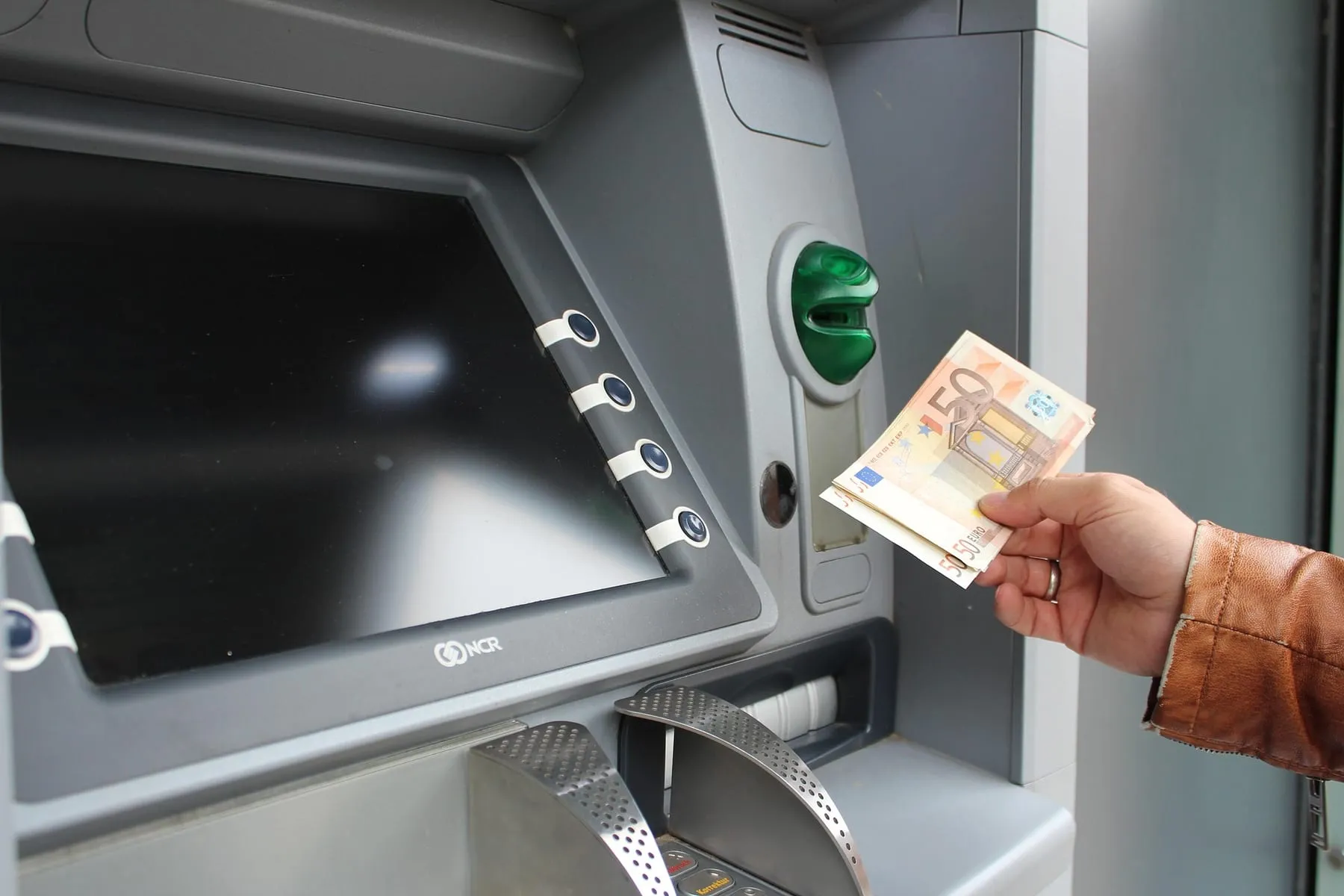
The mechanism was consistent: criminals gave victims detailed instructions on withdrawing cash from a bank, locating a specific kiosk, and depositing funds — often staying on the line throughout. The machines were not compromised. They were used exactly as designed, by people who had been manipulated into using them.
SB 2319 was signed by Governor J.B. Pritzker on 18 August 2025, the same day as the Digital Assets and Consumer Protection Act. Unlike DACPA, whose licensing provisions were deferred to 2027, the kiosk consumer protections took effect immediately.
The fee cap and transaction limits
Three numbers, and they apply to every kiosk in Illinois regardless of operator.
The cap is a genuine protection — before it, Chicago-area machines were quoted in surveys at anywhere from 10% to 23%. It is also worth being clear that 18% remains an extraordinary rate by the standards of any other consumer financial product, and published Illinois rates still run to the mid and high teens on the buy side.
For a full dollar-by-dollar breakdown of what the cap permits at each transaction size, see our fees and limits guide.
Disclosure duties
Operators must provide disclosures before engaging in each transaction — not afterwards, and not buried in terms you agree to once.
In practice the disclosure screen should show you four things, and you should read all four:
- The fee, as a percentage or dollar amount.
- The exchange rate the machine will use — a separate cost from the fee, and where much of the real variation between machines lives.
- The amount of crypto you will actually receive.
- Any network fee passed on separately.
Operators must also report the physical location of every kiosk to the Illinois Department of Financial and Professional Regulation, which is what makes enforcement possible at all.
The disclosure requirement is the most useful provision in the Act and the least used. Its whole purpose is to let you compare the machine's quoted rate against a live price on your phone before you commit — which takes about ten seconds and is the single highest-value action available at a kiosk. A machine advertising 9.99% at a rate four percent off market is charging you more than one advertising 14% at a fair rate, and only the disclosure screen lets you see that.
Anti-fraud obligations
Four requirements sit on operators, and they are more substantive than most state kiosk laws.
The wallet-screening requirement matters more than it sounds. A great deal of kiosk fraud sends funds to addresses that are already known to analytics firms from earlier reports. Blocking those transfers at the machine stops the loss before it happens.
The designated-officer requirement matters practically: it means that when you make a refund claim, there is a named function responsible for handling it rather than a generic support queue.
The refund right
This is the provision that distinguishes Illinois from most states, and it is worth quoting the structure precisely because the details determine whether a claim succeeds.
Operators are required to issue refunds for fraudulent transactions at the request of a new customer within the new customer period.
- New customers are entitled to full refunds for up to three fraudulent transactions within their first week or first three transactions with that operator.
- Established customers may recover fees under similar conditions.
- The victim must contact the operator within 30 days to report the fraud.
- The victim must submit a police or government report to the operator within 60 days.
Two deadlines, both short
Thirty days to notify, sixty days for the report — both running from the transaction. People commonly lose the first fortnight to disbelief or embarrassment, which is exactly when the window is most valuable. Act on the day you realise. Our step-by-step claim guide covers the sequence.
Registration, bonds and net worth
The Act creates a registration regime administered by IDFPR.
- Registration with the Department is mandatory for kiosk operators, with provisions covering renewal and refusal of registration.
- Location reporting. Operators must report the physical location of every kiosk they run in the state.
- Surety bond requirements apply to registrants.
- Tangible net worth requirements apply to registrants.
The bond and net worth conditions are the parts of the Act that shape the market rather than individual transactions. They raise the cost of operating a small or thinly capitalised network in Illinois, which is a deliberate policy choice — and one that becomes more pointed in light of Bitcoin Depot's Chapter 11 filing in May 2026, which deactivated roughly 9,000 machines nationally with no notice to customers holding balances.
Registration sits alongside the broader Digital Assets and Consumer Protection Act framework, under which digital asset businesses must be licensed by IDFPR by 1 July 2027 with penalties reaching $100,000 per day for unlicensed activity. See our licensing guide.
What the Act means for you, practically
Six things you can actually use.
- No Illinois kiosk may charge you more than the greater of $5 or 18%. If a screen quotes more, photograph it and report the operator to IDFPR.
- Your daily limit is $2,500 as a new customer, and handing over more identification does not change that.
- You are entitled to see the fee and the rate before you confirm. A machine that does not show both is not complying.
- There is a named person responsible for your complaint. Ask for the consumer protection officer.
- If you were defrauded as a new customer, you have a statutory refund right on up to three transactions — 30 days to notify, 60 days for a police report.
- Transfers to flagged wallets should be blocked at the machine. If a transaction is refused for this reason, that is the Act working, not a malfunction.
And the thing the Act cannot do
None of this reverses a blockchain transaction. The refund right is an obligation on the operator, not a recovery of the crypto itself — which is gone the moment it confirms. That is why the disclosure and screening provisions matter more than the refund provision: they are designed to stop the loss rather than compensate for it.
This page describes a statute and its published requirements. It is not legal advice, and the application of any provision to a particular set of facts is a question for an Illinois attorney.
Questions Illinois readers actually ask
What is the Illinois Digital Asset Kiosk Act?
Senate Bill 2319, signed by Governor J.B. Pritzker on 18 August 2025, regulating every cryptocurrency kiosk operating in Illinois. It caps fees at the greater of $5 or 18% of the transaction, limits daily activity to $2,500 for new customers and $10,500 for established ones, requires pre-transaction disclosures, mandates blockchain analytics screening and live customer service, and gives defrauded new customers a statutory right to refunds. Its consumer protection duties took immediate effect.
When did the Illinois crypto ATM law take effect?
The consumer protection provisions took effect immediately on signing, 18 August 2025 — including the fee cap, daily limits, disclosure duties and refund rights. Registration and financial requirements for operators phase in alongside the wider Digital Assets and Consumer Protection Act framework, under which digital asset businesses must register with IDFPR by 1 July 2027.
Can an Illinois crypto ATM charge more than 18%?
No. The statutory ceiling is the greater of $5 or 18% of the transaction value, which means the $5 floor applies to very small transactions and the percentage governs everything above roughly $28. A machine quoting more is in violation and can be reported to the Illinois Department of Financial and Professional Regulation. Note that the exchange rate the machine offers is a separate cost from the disclosed fee.
Who enforces the Digital Asset Kiosk Act?
The Illinois Department of Financial and Professional Regulation. Operators must register with the Department, report the physical location of every machine, meet surety bond and tangible net worth requirements, and designate both a compliance officer and a consumer protection officer. IDFPR holds examination and enforcement authority and handles registration renewal and refusal.
Does the Kiosk Act apply to Coinstar machines?
The Act regulates digital asset kiosks. Coinme’s service through Coinstar machines operates on a different model — cash in, voucher out, redeemed in an app with separate identity verification — and the precise regulatory treatment depends on how the service is structured. In practice the Coinstar route is typically cheaper than a dedicated crypto kiosk regardless, but do not assume the statutory refund right automatically applies; ask the operator.
Keep reading
- Claiming a kiosk refund Step by step, with deadlines
- Fees and limits in dollars What 18% actually takes
- Illinois bitcoin ATM guide Operators, locations, data
- All Illinois crypto laws DACPA, the tax and licensing
- Operators compared Who must comply, and how
- Crypto scams in Illinois What the Act was written against