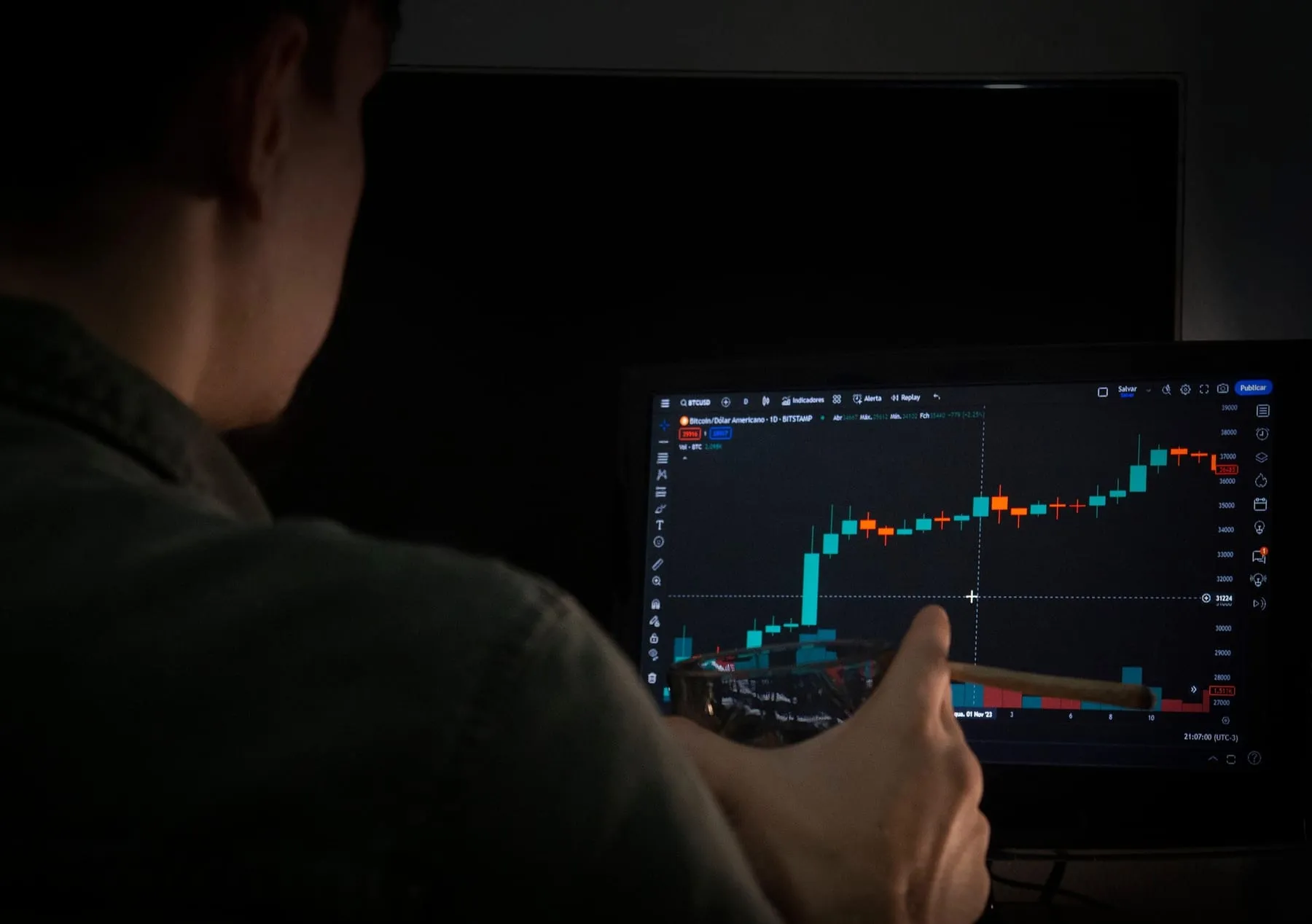
The Evanston picture
Evanston sits directly north of Chicago along the lake, with Northwestern University occupying a substantial portion of its lakefront and roughly 23,000 students in term time. The permanent population is affluent, highly educated and almost entirely banked. Healthcare, higher education and professional services dominate employment.
Crypto kiosk presence is correspondingly thin. There are machines — mostly along the Howard Street boundary with Chicago and in a few convenience-retail sites on Dempster and Main — but usage is low, because almost nobody here needs a cash-to-crypto rail. The overwhelming majority of Evanston purchases happen through exchanges.
That shifts the useful questions. Instead of "where can I buy this", the ones that matter locally are which venue to trust, how to hold assets safely, what the 2027 Illinois transaction tax will do to an active account, and — for a large transient student population — how not to lose a semester's living costs to someone in a group chat.
How to buy properly from an Evanston address
Three decisions, in order of how much they matter.
Pick a venue with licensing you can verify. Under the Digital Assets and Consumer Protection Act, firms exchanging, transferring or holding digital assets for Illinois customers must be licensed by the Illinois Department of Financial and Professional Regulation by 1 July 2027, with penalties up to $100,000 a day for unlicensed activity. Several already hold Illinois money transmitter licences. Search the company on NMLS Consumer Access before you fund anything — it takes under two minutes and tells you more than any homepage claim.
Use the professional interface. Every major exchange has a simple buy button priced for convenience and a real order book priced for volume. Coinbase calls its version Advanced Trade; Kraken and Gemini have equivalents. Same account, considerably lower cost, hidden behind a menu.
Fund by ACH, buy with a limit order. Under 1% all-in on liquid pairs. If you need speed for a first purchase, a debit card settles in seconds for a small premium — reasonable once, poor as a habit.
Our exchange comparison ranks ten venues open to Illinois residents on exactly these criteria.
For Northwestern students
The advice here is short, and it is the same advice we would give a friend.
- You must be eighteen and complete identity verification. Any service offering to skip that is not a service you want holding your money.
- Never use borrowed money. Not loan disbursements, not credit cards, not money from a housemate. Every year produces a fresh set of people who learned this expensively.
- Anyone who contacts you first is running a script. Instagram, Discord, dating apps, LinkedIn — the introduction varies, the structure does not. A stranger who initiates contact and eventually mentions a crypto opportunity is executing a known pattern.
- A platform that shows profits but blocks withdrawals is not experiencing a technical problem. The fee, then the tax, then the compliance hold — there is no money behind the interface.
- Every sale is a taxable event federally, regardless of profit, and Illinois taxes gains through your state return.
A specific warning for international students
Calls claiming an immigration problem, an unpaid fee or a legal issue — with instructions to resolve it at a crypto kiosk — target international students specifically and are entirely fraudulent. No university office, government agency or court resolves anything at a crypto machine, ever.
Keeping it safe
Illinois law now gives exchange-held assets meaningful protection. Licensed firms must segregate customer assets, keep them fully backed, hold them in trust so they cannot be lent out or absorbed in an insolvency, publish outage histories and state plainly whether anything is insured.
That is a real improvement, and it is not the same as holding your own keys. The rule we use: an amount you would be irritated to lose can sit on a licensed exchange; an amount you would be genuinely damaged to lose belongs on hardware you control.
Two practical points that catch people out:
Two-factor authentication must be app-based, not SMS. SIM-swap attacks — where an attacker persuades a mobile carrier to move your number to their device — are the most common way ordinary accounts get emptied. An authenticator app removes that path entirely.
A recovery phrase belongs on paper. Not in a photo, not in a password manager, not in a notes app. If you hold a meaningful amount, two paper copies in two physical locations. Our wallet guide covers the options.
The Illinois rules that apply here
Evanston has no local crypto ordinance. Three state statutes and one federal framework cover everything.
Full detail in our Illinois crypto law overview.
Renters, students and a practical warning
Evanston's housing stock is heavily rented, much of it to students, and that produces a specific vulnerability worth naming.
Rental fraud demanding crypto is a live pattern in university towns. A listing appears at a plausible price, the "landlord" cannot show the property in person for a stated reason, and a deposit is requested by crypto, gift card or wire to secure it. No legitimate Illinois landlord or letting agent takes a security deposit in cryptocurrency — Illinois security deposit law contemplates money held on the tenant's behalf, which is not what a crypto transfer is.
The same structure appears in sublet and housing-swap scams around term boundaries, and it targets international students hardest because they are frequently arranging accommodation from abroad.
Three checks that cost nothing: view the property or have someone you know view it; verify the landlord against the property records; and refuse any payment method that cannot be reversed. Blockchain transactions are final, which is precisely why fraudsters ask for them.
Our Illinois scam guide covers the wider catalogue, including the investment and romance patterns that target students directly.
Evanston crypto questions
Are there bitcoin ATMs in Evanston?
A small number, mostly along the Howard Street boundary with Chicago and at a few convenience-retail sites on Dempster and Main. Usage is low because Evanston is heavily banked and residents overwhelmingly buy through exchanges, where the same purchase costs under 1% instead of up to the 18% Illinois kiosk ceiling.
Can Northwestern students buy cryptocurrency?
Yes, from age eighteen, with identity verification — required by every licensed US exchange. Illinois imposes no additional age restriction. What matters more than eligibility is the advice around it: never trade with borrowed money, treat anyone who contacts you first as a scammer, and remember that every sale creates a federal reporting obligation whether or not you profited.
Is it safe to leave crypto on an exchange in Illinois?
Safer than it was. Under the Digital Assets and Consumer Protection Act, licensed firms must segregate customer assets, keep them fully backed and hold them in trust so they cannot be lent out or absorbed into an insolvency estate. That is genuine legal protection — but not deposit insurance, and it does not protect you from losing account access. Use app-based two-factor authentication, never SMS, and move significant holdings to hardware you control.
What is the best exchange for someone in Evanston?
One whose licensing you can verify on NMLS Consumer Access, with a real order book rather than only a one-tap buy button, and straightforward withdrawals to self-custody. Access is not the constraint in Evanston — every venue is available — so the selection criteria become licensing, all-in cost on the professional interface, and how easily you can move assets out. Our comparison ranks ten venues on that basis.
Related Illinois guides