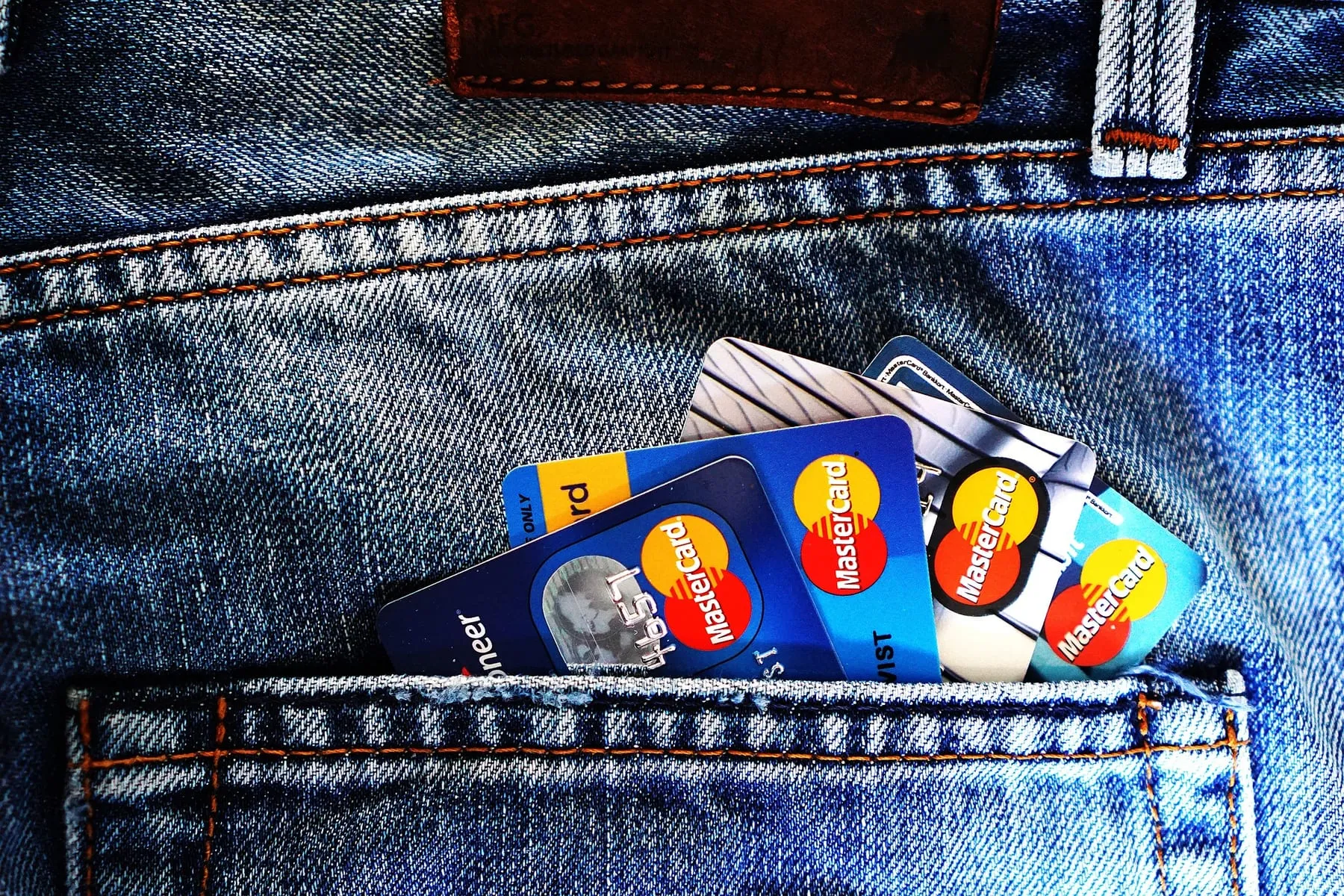
Two different products, both called “prepaid card”
This page covers two things that are frequently confused, and separating them is the first useful step.
Both are "multi-merchant" products for Illinois legal purposes, which — as the law section below explains — puts them outside the state's gift card statute and under federal rules instead.
Funding a crypto purchase with a prepaid card
This is the part that genuinely matters, and it is the most overlooked route in Illinois cash-to-crypto.
Many licensed exchanges accept reloadable prepaid debit cards as a funding method. Not all of them, and policies vary, but enough that it is always worth testing before assuming a kiosk is your only option.
Why that matters: an Illinois crypto kiosk may legally charge up to the greater of $5 or 18% of the transaction. A prepaid card carries a purchase or load fee at the retailer — typically a few dollars — and the exchange then charges its ordinary card-purchase cost. On a $300 purchase the difference is frequently forty dollars or more.
$300 in cash, two routes
| Step | Prepaid card route | Kiosk route |
|---|---|---|
| Cash in | $300 | $300 |
| First charge | Card purchase or load fee | Up to $54 fee |
| Second charge | Exchange card-purchase cost | Exchange rate spread |
| Roughly what you keep | Often $280–$292 | Often $246–$270 |
| What you also get | A real account and full transaction history | A printed receipt |
Illustrative, based on published 2026 terms. Card acceptance policies vary by exchange.
Requirements to make it work: register the card in your own name with the issuer, use the matching billing address, and check the exchange's accepted funding methods before loading a large amount. An unregistered rack card will usually be declined.
Buying prepaid cards with crypto
The opposite direction. Crypto gift card marketplaces list general-purpose prepaid Visa and Mastercard products alongside retailer gift cards — Bitrefill maintains a dedicated payment-cards category, for example.
The appeal: spendable anywhere the network is accepted, rather than at a single retailer. For converting crypto into general-purpose spending — a builder's merchant, an independent repair shop, a local restaurant, a medical co-pay — nothing else on the site comes close.
The costs: higher than a retailer gift card. General-purpose cards typically carry a purchase fee, and depending on the product, may carry activation, ATM or inactivity charges that a single-merchant card would not.
The limitations:
- Many are non-reloadable single-load products.
- Some cannot be used for recurring payments or subscriptions.
- Card networks sometimes decline certain merchant categories.
- Consumer protection is weaker than for a bank-issued card if the number is compromised.
The Illinois legal distinction that matters
This is genuinely important and almost never explained properly.
Illinois protects gift certificates under the Consumer Fraud and Deceptive Business Practices Act at 815 ILCS 505/2SS. A gift certificate sold in Illinois on or after 1 January 2008 may not carry an expiration date earlier than five years from issuance, nor any post-purchase fee, with civil penalties up to $50,000 per infraction.
But the statute explicitly excludes "any gift certificate usable with multiple sellers of goods or services" from its definition. A general-purpose prepaid Visa or Mastercard is precisely that.
What that means in practice
A single-merchant store card sold in Illinois cannot charge you a dormancy fee. A general-purpose prepaid card can, subject to the federal CARD Act — which sets a five-year minimum before funds expire but permits certain inactivity fees after a period of non-use, with disclosure. The Illinois protection you would rely on for a Target card simply does not apply to a prepaid Visa.
So: read the fee schedule on a general-purpose card, every time. Our gift card hub covers the single-merchant side where the Illinois rules do apply.
Where the fees hide
Fees to look for on a general-purpose prepaid card
| Fee | When it applies | Avoidable? |
|---|---|---|
| Purchase or activation | At the point of sale | No — factor it in |
| Monthly maintenance | On some reloadable products | Sometimes waived by direct deposit |
| Inactivity | After a period of non-use | Yes — spend the balance |
| ATM withdrawal | Cash withdrawals | Yes — use it as a card |
| Reload | Adding funds at retail | Partly — load larger amounts less often |
| Foreign transaction | Non-US merchants | Yes |
The inactivity fee is the one that quietly erodes a crypto-funded balance. A card bought and forgotten can lose value month by month — which, on a single-merchant card sold in Illinois, would be unlawful. On a general-purpose card it is disclosed and permitted.
When to use which
Use a reloadable prepaid card to fund an exchange if you have no bank account. This is the single most valuable thing on this page. Test it with a small amount, confirm your exchange accepts it, and you have permanently escaped kiosk pricing.
Buy a general-purpose prepaid card with crypto when you need to spend somewhere no gift card reaches. Accept that it costs more than a retailer card and read the fee schedule.
Use a retailer gift card when you know where you are spending. Cheaper, better protected under Illinois law, and no inactivity fees. See our gift card hub.
Use a bank account and an exchange if you possibly can. Under 1% all-in, full records, and every route on this site becomes unnecessary. Several banks and credit unions serving Illinois open accounts without a Social Security number, accepting an ITIN or consular identification instead.
The fraud warning
Never buy a prepaid card because someone asked you to, and never read the numbers over the phone. No government agency, court, tax authority, utility or bank accepts payment in prepaid cards. The request is the fraud. Our scam guide covers the patterns.
How to test whether your exchange accepts one
This is the part that decides whether the cheapest cash route on this site is available to you, and it takes about ten minutes.
- Buy or use a reloadable prepaid card — the registered kind with your name on it, not a rack gift card.
- Register it fully with the issuer. Your legal name, your address, your date of birth. An unregistered card has no billing address to match and will be declined.
- Open an account at a licensed exchange and complete identity verification. Check the venue on NMLS Consumer Access first.
- Add the card as a payment method using the exact billing address registered with the issuer. Mismatches are the single most common cause of a decline.
- Attempt a small purchase — ten or twenty dollars. If it clears, you have permanently escaped kiosk pricing.
- If it declines, try a different exchange before concluding the route does not work. Acceptance policies differ, and a decline at one venue is not a decline everywhere.
Why it is worth ten minutes
On a $300 purchase the difference between this route and an Illinois kiosk pricing near the statutory ceiling is frequently forty dollars or more. Repeat it monthly and you are several hundred dollars a year better off — for a test that either works the first time or does not.
Questions Illinois readers actually ask
Can I buy crypto with a prepaid card in Illinois?
Often, yes. Many licensed exchanges accept reloadable prepaid debit cards as a funding method, though policies vary and an unregistered rack card is usually declined. Register the card in your own name with the issuer and use the matching billing address. This route is dramatically cheaper than a crypto kiosk for anyone without a bank account — frequently forty dollars better on a $300 purchase.
Can I buy a prepaid Visa with bitcoin?
Yes. Crypto gift card marketplaces list general-purpose prepaid Visa and Mastercard products alongside retailer cards — Bitrefill maintains a dedicated payment-cards category. They cost more than a retailer gift card and may carry activation, inactivity or ATM fees, but they are spendable anywhere the network is accepted rather than at a single merchant.
Do Illinois gift card protections apply to prepaid Visa cards?
No. Illinois law at 815 ILCS 505/2SS prohibits expiry under five years and post-purchase fees on gift certificates — but explicitly excludes any certificate usable with multiple sellers of goods or services. A general-purpose prepaid Visa is exactly that, so it falls under the federal CARD Act instead, which sets a five-year minimum before funds expire but permits certain disclosed inactivity fees.
Which is better, a prepaid card or a gift card?
A retailer gift card if you know where you are spending — cheaper, better protected under Illinois law, and no inactivity fees. A general-purpose prepaid card if you need to spend somewhere no gift card reaches, accepting the higher cost and the fee schedule. And if you can open a bank account at all, an exchange funded by ACH beats both by a wide margin.
Related routes and guides