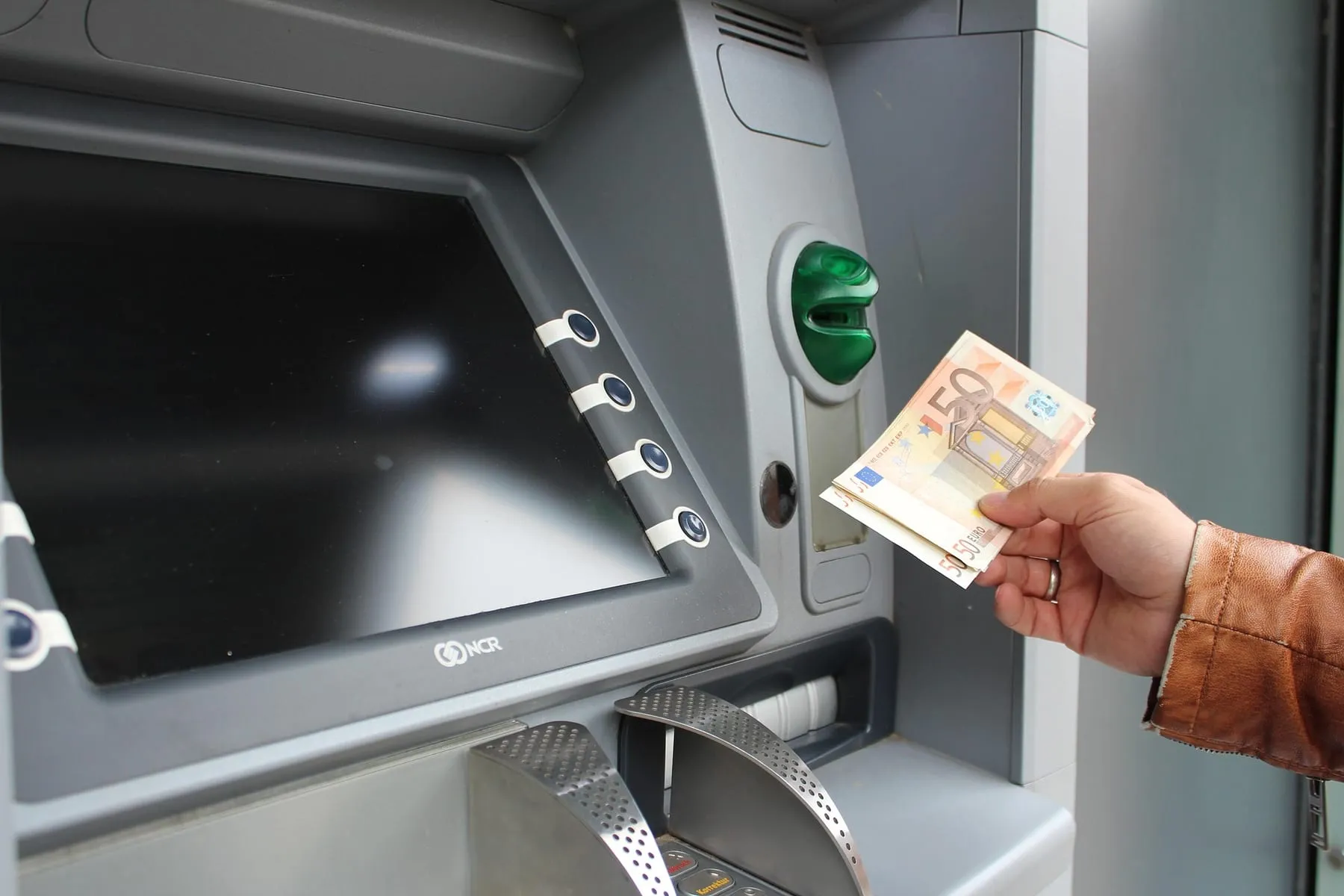
Waukegan’s market
Waukegan is the seat of Lake County and one of the most economically distinct cities in the northern suburbs. It sits on Lake Michigan with a working harbour, has a long industrial history — pharmaceuticals, chemicals and manufacturing — and today carries a population that is around half Hispanic or Latino, with a significant share either unbanked or relying on cheque-cashing and money-order services rather than a chequing account.
That combination produces a heavy crypto kiosk presence. Machines run along Grand Avenue, Belvidere Road, Washington Street, Sheridan Road and the Green Bay Road commercial strip, hosted by convenience stores, filling stations, currency exchanges and smoke shops. Fifteen miles south along the lake, in Lake Forest and Highland Park, you will struggle to find one.
There is no institutional presence and no walk-in exchange office. Anyone offering to meet you in person to swap cash for crypto in Waukegan is running a scam, and Lake County law enforcement has handled enough of these to say so plainly.
What the machines actually cost
Since August 2025, Illinois has capped kiosk charges at the greater of $5 or 18% of the transaction value, with daily limits of $2,500 for new customers and $10,500 for established ones. Operators must display fees before you confirm, screen destination wallets with blockchain analytics, provide live customer service during operating hours, and register their machine locations with IDFPR.
The cap is a genuine protection. It is also the highest ceiling most people will encounter on any consumer financial product, and Waukegan machines sit closer to it than machines in wealthier parts of the county.
$400 cash into bitcoin, Waukegan
| Route | Roughly what you keep | What it takes |
|---|---|---|
| Licensed exchange, ACH | $396–$399 | A bank account, 1–3 days |
| Licensed exchange, debit card | $384–$394 | A debit card, seconds |
| Coinme via Coinstar | $340–$376 | Cash, a phone, store hours |
| Crypto kiosk | $328–$360 | Cash, and up to $72 in fees |
Illustrative, based on published 2026 rates. The exchange rate a machine quotes is separate from its stated fee — check both against a live price on your phone.
The cheaper cash route almost nobody uses
Coinme operates through the green Coinstar coin-counting machines that sit inside grocery stores across Lake County. You feed in cash, the machine prints a voucher, you redeem the voucher in the Coinme app and the crypto lands in your account. Purchases commonly run to $5,000 a day and $30,000 a month. Supported assets include bitcoin, ether, litecoin, polygon, chainlink, dogecoin and stellar.
At some partner retailers, Coinme Cash removes the machine entirely: hand notes to the cashier at checkout and the crypto arrives in about fifteen minutes.
Neither is cheap in absolute terms. Both are meaningfully cheaper than a crypto kiosk pricing near 18%. If cash is genuinely your only option, this is where to start.
Something that consistently surprises people: two Coinstar machines a few miles apart can quote materially different all-in costs on the same $200 purchase, because the retail partner's share is built into the rate. In a market like Waukegan where several stores are within a short drive, checking the quoted rate at two of them before committing is one of the few genuinely free ways to save money here. We have seen the gap run to several percentage points.
If you have no bank account
This is the situation the whole kiosk industry is built around, and it deserves a straight answer rather than a lecture about opening a bank account.
First: a debit card is often enough. Many exchanges accept prepaid and reloadable debit cards for purchases, and a prepaid card loaded at a retailer costs far less than an 18% kiosk fee. It is worth testing whether your card works before assuming a kiosk is the only route.
Second: Coinstar beats kiosks. Cheaper, no bank account required, and available during store hours across the county.
Third: kiosks are legitimate but expensive. They are regulated, registered with IDFPR, and operating within a legal framework — they are not a scam in themselves. They are simply the costliest route, and using one should be a decision rather than a default.
Fourth: identification tiers. Illinois kiosk limits apply regardless of what you provide, but operators tier their own verification — a phone number for the smallest amounts, then a government ID scan, then in some cases a selfie match. All licensed operators must comply with federal Bank Secrecy Act obligations. Nobody legitimate lets you transact meaningfully without identification.
Sending money abroad from Waukegan
Waukegan's remittance flow is substantial, and crypto is regularly pitched as a cheaper alternative to traditional transfer services. Whether it actually is depends entirely on how you buy.
The transfer itself is fast and cheap, especially with a dollar-pegged stablecoin. The cost sits at the two ends: buying with cash at a kiosk can cost 18%, and converting back to local currency at the destination costs again. Together that usually exceeds a conventional wire, with more steps and no consumer recourse.
The version that works is a bank-funded exchange account, stablecoins, and a recipient who already has a wallet or an account at a reputable local exchange. That removes the expensive half of the trip.
The scam that exploits this
A great deal of Illinois kiosk fraud opens with a message claiming a relative is detained, hospitalised or in legal trouble abroad and needs money immediately. If a family emergency arrives by phone or text and involves a crypto kiosk, treat it as fraud until you have reached that person on a number you already had.
Your refund rights if it goes wrong
Illinois recorded 510 crypto kiosk complaints in 2025 with adjusted losses of $20,077,277 — sixth highest of any state. Nationally, more than half of the 13,460 complaints came from people aged fifty and over.
The Digital Asset Kiosk Act gives Illinois victims something most states do not: a statutory right to a refund. If you were a new customer of that operator, you can recover up to three fraudulent transactions made in your first week or first three uses. The deadlines are strict:
- Notify the kiosk operator within 30 days that the transactions were fraudulent.
- File a report with the Waukegan Police Department or the Lake County Sheriff.
- Provide that police report to the operator within 60 days.
- Report separately to the FBI's IC3 at ic3.gov.
Operators must now designate a compliance officer and a consumer protection officer, so there is a named function to write to rather than a generic support queue. Keep receipts and photograph the machine screen if you can. Our refund walkthrough covers the sequence.
Waukegan crypto questions
Where are the bitcoin ATMs in Waukegan?
Along Grand Avenue, Belvidere Road, Washington Street, Sheridan Road and the Green Bay Road commercial strip, hosted mostly by convenience stores, filling stations, currency exchanges and smoke shops. Waukegan carries one of the denser kiosk corridors in Lake County — a marked contrast with the lakefront communities to the south, where machines are scarce because cash usage is low.
What is the cheapest way to buy crypto with cash in Waukegan?
Coinme through the green Coinstar machines in local grocery stores, or the cashier-based Coinme Cash option at partner retailers. Both are meaningfully cheaper than a crypto kiosk, which Illinois allows to charge up to the greater of $5 or 18%. If you have any card at all — including a prepaid reloadable card — an exchange purchase is cheaper still and worth testing before defaulting to a machine.
Can I buy crypto in Waukegan without a bank account?
Yes. Coinstar and Coinme Cash require no bank account, and crypto kiosks take physical notes. Many exchanges also accept prepaid reloadable debit cards, which is often cheaper than either. What you cannot avoid is identification: all licensed operators must comply with federal Bank Secrecy Act obligations, and kiosk operators tier their verification from a phone number up to an ID scan as amounts increase.
Is it cheaper to send money to Mexico with crypto from Waukegan?
Only if you skip the cash on-ramp. The transfer itself is fast and cheap, particularly with stablecoins. But buying with cash at an Illinois kiosk can cost up to 18%, and converting back to pesos at the destination costs again — together usually more than a conventional remittance service. Buying through a bank-funded exchange account and sending stablecoins directly removes the expensive half.
Related Illinois guides