The Wheaton picture
Wheaton is the seat of DuPage County — the courthouse, the county administration and a substantial legal sector sit here — alongside Wheaton College and a settled, affluent residential population. Employment skews toward law, public administration, education, healthcare and professional services.
Crypto kiosk presence is minimal and lightly used. Banking penetration is near-universal and residents buy digital assets through exchanges without difficulty. Access is not the constraint.
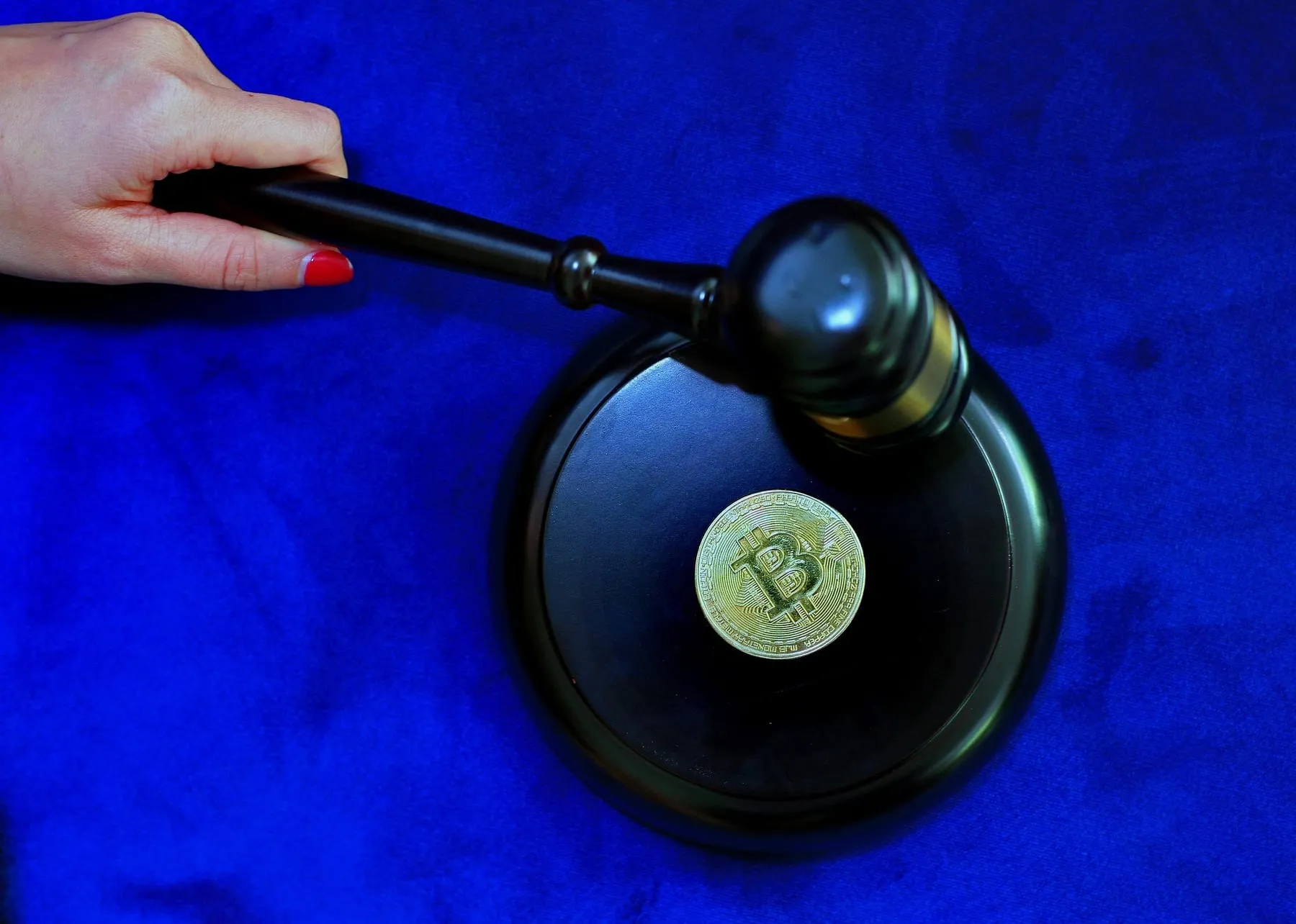
What makes Wheaton distinctive is the courthouse. Digital assets now appear regularly in family law and probate matters filed in DuPage County, and the practical problems they create — valuation, disclosure, division, recovery — are ones most crypto guides never address. This page does.
Buying from a Wheaton address
The mechanics are standard, and one point deserves emphasis for this town in particular.
- Choose a licensed venue. Under the Digital Assets and Consumer Protection Act, firms handling digital assets for Illinois customers must be licensed by IDFPR by 1 July 2027, with penalties up to $100,000 a day for unlicensed activity. Look the company up on NMLS Consumer Access.
- Use the professional interface. Every major exchange runs a simple buy button and a real order book on the same account; the difference in cost is material at four figures and up.
- Fund by ACH, place a limit order. Under 1% all-in.
- Enable app-based two-factor authentication, never SMS.
- Keep every record. Exchanges produce full transaction histories. Kiosks produce a receipt. That asymmetry matters more than the fee difference in any situation where you later have to prove what happened.
Our exchange comparison ranks the venues open to Illinois residents.
Crypto in a divorce
Nothing here is legal advice — this is a description of practical problems, and anyone in an actual proceeding needs an Illinois family lawyer. But four issues recur often enough to be worth naming.
Disclosure. Digital assets are marital property in Illinois when acquired during the marriage, the same as any other asset. Failing to disclose them in a financial affidavit is not a clever strategy; it is a misrepresentation to the court, and blockchain transactions are permanently and publicly recorded.
Discoverability. Exchange accounts are subpoenaable. Bank records show transfers to exchanges. Tax returns show reported disposals. Forensic accountants who trace crypto are now routine engagements in DuPage County family matters, and the trail from a bank account to an exchange to a wallet is usually straightforward to follow.
Valuation. Digital assets can move 20% in a week, which makes a valuation date genuinely consequential in a way it rarely is for a house or a pension. Agreements sometimes specify a date, sometimes a formula, sometimes an in-kind split.
Division mechanics. Transferring crypto is not like transferring a brokerage account. It may require a taxable disposal, and after 1 January 2027 the Illinois Digital Asset Tax Act's 0.2% will apply to broker transfers — including, on the statute's face, transfers between accounts. Worth raising with counsel early rather than discovering at settlement.
Crypto in an estate
The DuPage County probate division handles this more often each year, and the failure mode is stark.
Exchange-held assets are recoverable. A licensed firm has ownership records and a process for estates. Under Illinois law licensed firms must now hold customer assets in trust, segregated and fully backed, which strengthens an estate's position considerably. It is slow, but it works.
Self-custodied assets are recoverable only by whoever holds the recovery phrase. If nobody does, they are permanently gone. No court order, no executor's authority, no subpoena retrieves them. This is not a procedural obstacle — it is a mathematical one.
A workable arrangement, and one worth raising with whoever drafted your will:
Our wallet guide covers the custody side.
The 2027 tax
From 1 January 2027 the Digital Asset Tax Act charges 0.2% of the value of any digital asset a broker exchanges, transfers or stores for an Illinois customer. It taxes the activity rather than the profit, and transfers between two accounts you own are explicitly included. Brokers collect it and show it as a separate line item.
The statute leaves genuinely open questions — "value" is not defined, and the bundling provision could turn one customer transaction into several taxable events. Two industry lawsuits are pending in the Sangamon County Circuit Court, arguing the dormant Commerce Clause, the federal Internet Tax Freedom Act and Illinois due process.
For a Wheaton household, the practical implication is narrow but real: an asset division, an estate distribution or a portfolio consolidation executed after 1 January 2027 may attract the charge on each broker transfer involved. That is a question for a tax professional, and it is worth asking before the date rather than after. Our tax guide covers what the statute says.
A note for Wheaton's institutions
Wheaton has an unusually high concentration of non-profits, churches, colleges and charitable foundations for a city its size, and digital asset donations now reach them regularly enough to be worth addressing.
Accepting a crypto donation does not make an organisation a money transmitter. Receiving digital assets as a gift, like receiving them as payment for goods or services, falls outside the licensing triggers. What triggers licensing is exchanging crypto for others, holding it on their behalf, or facilitating third-party transfers.
Three practical points for a board considering it:
- Most organisations should convert immediately. Processors settle to dollars automatically, which removes price risk and avoids a second taxable event on disposal. Holding donated crypto is an investment decision requiring an investment policy.
- Valuation and substantiation matter. A donation is recorded at fair market value on receipt, and donors claiming a deduction above certain thresholds face their own substantiation requirements — including qualified appraisal rules for non-cash gifts. Get this in writing before the first gift, not after.
- From 1 January 2027, the Illinois Digital Asset Tax Act's 0.2% applies to broker activity. Your processor may be a broker; the charity receiving a gift is not.
This is a conversation for the organisation's accountant and counsel. Our business guide covers the mechanics.
Wheaton crypto questions
Is cryptocurrency marital property in an Illinois divorce?
Digital assets acquired during a marriage are generally treated as marital property in Illinois, the same as any other asset, and must be disclosed in a financial affidavit. Exchange accounts are subpoenaable, bank records show transfers to exchanges, and blockchain transactions are permanently public — so non-disclosure is both a misrepresentation to the court and usually discoverable. This is a matter for an Illinois family lawyer, not a website.
What happens to self-custodied crypto in probate?
It is recoverable only by whoever holds the recovery phrase. If nobody does, the assets are permanently inaccessible — no court order, executor’s authority or subpoena retrieves them. Assets held on a licensed exchange are different: the firm has ownership records and an estate process, and Illinois law now requires customer assets to be held in trust, segregated and fully backed. Keep a written inventory and two paper copies of any recovery phrase.
Are there crypto ATMs in Wheaton?
Very few, and lightly used. Wheaton is heavily banked with low cash usage, so there is little for a kiosk network to serve. Residents buy through exchanges, where the same purchase costs under 1% instead of up to the 18% Illinois kiosk ceiling — and produces a complete transaction record rather than a paper receipt, which matters if a court or a tax authority ever asks.
Will the 0.2% Illinois tax apply to dividing crypto in a settlement?
Possibly. From 1 January 2027 the Digital Asset Tax Act charges 0.2% on broker exchanges, transfers and custody for Illinois customers, and transfers between accounts are explicitly included on the statute’s face. How that applies to a court-ordered division is not settled — the Act leaves "value" undefined and is under challenge in two Sangamon County lawsuits. Raise it with counsel and a tax professional before the effective date.
Related Illinois guides